Labour's choices after Makerfield

The Makerfield byelection was unique. Until now, no one has lived through a period of Labour politics in which a by-election was held with the clear purpose of removing the party leader and Prime Minister. Five points are posted below in the wake of Makerfield. Much is missed and much more can and should be added as things develop.
1/
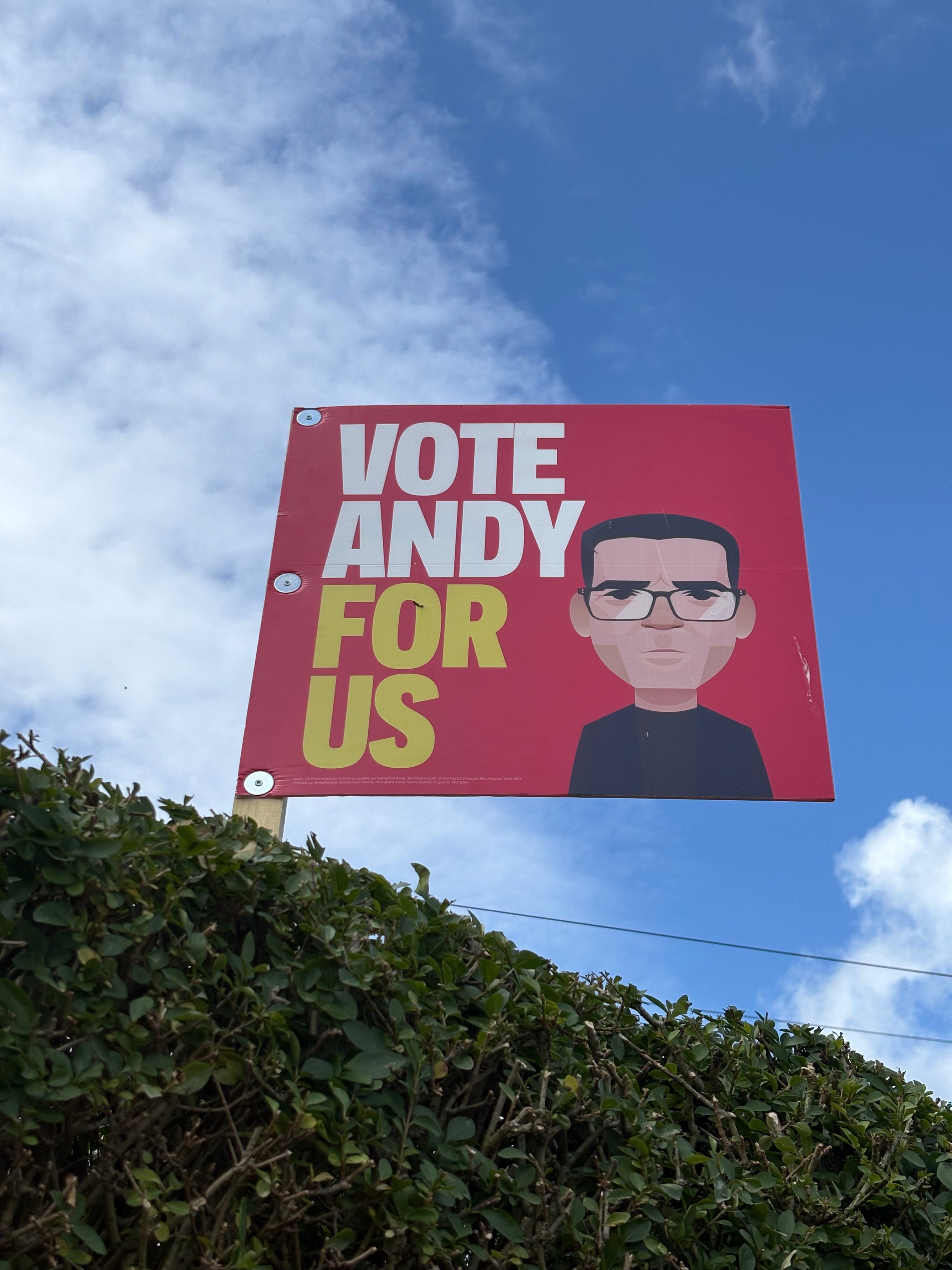
Andy Burnham’s victory in the Makerfield was overwhelming and emphatic. He took 55 per cent of the vote. His victory in 2026 was larger than in Makerfield in the general election two years ago on a higher turnout. He significantly increased Labour’s lead over Reform. It is a victory both in the election and against the trend of recent politics.
2/
Before turning to the Labour Party, on the right: the Makerfield result is a serious setback for Reform and the wider right. Reform has now been defeated in byelections in Greater Manchester twice this year – first by the Greens in Gorton & Denton, and now by Andy Burnham in Makerfield.
Over the past two weeks a vicious campaign has been underway in sections of the media to squeeze the vote of Restore Britain, the right splinter from Reform led by Rupert Lowe, in order to prevent a split right-wing vote letting Burnham through. The right wing Sun newspaper ran a page of analysis detailing how Nigel Farage had spoken to Donald Trump to complain that Elon Musk’s support for Restore was an obstacle for Reform. It was said that Reform was ready to blame Restore for a Burnham government, through its splitting of the vote in Makerfield.
None of this came to anything – Burnham’s margin of victory over Reform was far larger than Restore’s 6.8%. He won 54.8% to Reform’s 34.5%. Consequently both Reform and Restore went down to a big defeat.
It is of course a mistake to believe that the hard/extreme/far right(s) can be defeated only at the ballot box. The fight against the right is also in communities, on the streets, in the formation and battle of ideas, on social media, in political debate. But it is equally an error to downplay the importance of defeating them through the electoral process, not least because the right ultimately intends to take its politics all the way through to government.
Over the last month the right has been on the march. Reform had taken a swathe of councils in England. Farage and Lowe competed with dangerous language over the murder of Henry Nowak and the horrific attack in Belfast. Violent disorder in Southampton and pogromist rioting in Belfast played out against a backdrop of far-right figures calling for mass deportations of non-white people. Questions of the border between the north and south Ireland were raised.
Defeat for Reform, with a majority larger than Restore’s vote, will not only provide a partial feeling of optimism that the right can be stopped, but may ultimately provoke a crisis within the ranks of the right, including for its leadership figures.
There is no space for complacency, but the right’s defeat is also a positive development after weeks of hate.
3/
The overall left/liberal/green bloc in Makerfield cohered under Burnham. Luke Tryl of More In Common has noted the relative stability of the two broad halves of the electorate in the constituency. In 2024 the right bloc ie Tories and Reform, constituted 42.7 per cent of the electorate, the great bulk of which was for Reform. The left/liberal bloc of Labour, Green and LibDem constituted 56.4 per cent. This week, the right’s bloc of Reform, Restore and Tory came to 43.5 per cent of the vote, only marginally larger than two years ago. And the left/liberal bloc was not much different than last time either, slightly down to 55.9 per cent. The stability of the left/liberal bloc is interesting in itself because conditions are so much harder – with Labour in power and unpopular, and with the cost of living still biting. But this time Burnham took almost all of it - 54.8 per cent of votes cast. The coalescing around Burnham allowed him to secure the much greater margin of victory over Reform.
Labour lost more votes to liberal/progressive/left parties than to Reform in the May elections. And the loss of those votes aided Reform. Makerfield has demonstrated this process in reverse.
4/
The fallout from Makerfield represents a new and higher level of crisis for the Labour Party’s right wing, and raises questions about what it will choose to do next. It was the political choices of the right that brought the party to its knees and have provoked a rolling leadership crisis over many months. [See below].
In the face of repeated crises Downing Street and its allies on the party’s NEC moved to block a meaningful future leadership election by preventing Andy Burnham from seeking the Labour nomination for the Manchester Gorton & Denton byelection, subsequently won by the Greens. Gorton & Denton formed a perfect backdrop for Green advance in the May elections.
Blocking Burnham was both about protecting Starmer but also making the terrain easier for the right when Starmer eventually leaves.
The desertion of voters and the break-up of Labour’s electoral coalition – directly as a result of the policies of the Labour government – meant that Labour lost power in spectacular fashion in multiple contests in May. But the last two years have shown that in defence of its own status as the dominant faction of the Labour Party, and in the interests of keeping the party’s economic programme largely toothless, the pro-leadership faction is willing to jettison holding power all over Britain – shedding political control everywhere from the Welsh Senedd to councils from Gateshead and Sunderland to Hackney and Lambeth. Those disastrous losses in May and Keir Starmer’s poor response further weakened him and the ability of the right to get its way. Having been unable to block Burnham a second time, Labour’s right wing is in a highly defensive situation and forced to look for delaying tactics.
But a second tactic for the right is not to defeat Burnham in an election but instead to work out how to function under a likely Burnham leadership – which means seeking to put him under pressure to bend the stick towards their politics. The right of the party functions as the most consistently pro-big business, pro-war, pro-capital strand of opinion within the party, aiming to make Labour as safe and acceptable to big capitalism as possible. In the event of not being able to win, the right’s plan B is to tie down a more soft left leadership with pressure on economic and social policy and international policy – pushing for higher military expenditure, cuts to welfare, opposition to public ownership, restraint on public investment, elevation of relationships with big business, and the continuation of the status quo on foreign policy. In all this it is aided by media commentary.
Likewise the right will push for its personnel to be in the most key positions – to keep Rachel Reeves as Chancellor or at least bring in a such as Darren Jones or Pat McFadden to help calm the bond markets, sack Ed Miliband, etc. Plan B from the right would kill off a Burnham government’s ability to build and hold coalition together to defeat Reform, every bit as much as plan A under Starmer or Wes Streeting.
Furthermore, a change to a leader based on the PLP’s soft left represents a challenge to the internal dynamics of the party, where the right wing Labour First/LabToWin formation is currently the pro-leadership grouping in the grassroots and in the party’s structures. But it is evident from social media that many of the right’s adherents are bitter opponents of Burnham. Ed Miliband’s leadership period demonstrates that leaders without a base that can organise beyond the right’s framework struggle to transcend it. And left to itself the right will continue to use its weight in the party’s structures to pursue fixes and stitch ups that damage the political culture, and utilising the policy process and NEC to head off pressure for more radical change from the grassroots. Changing leader would only go so far without a change in the dynamics of the party’s internal politics.
5/
Fundamentally, as a change in leadership becomes inevitable, Labour’s choices go back to the question of overturning the wrong choices of the dying leadership.
Under Starmer and Reeves, Labour’s economic framework formed the basis of its conservative policy choices, which reduced its electoral/social base at the general election and deprived it of any meaningful popular enthusiasm; that was then expressed in its actions in government such as the winter fuel allowance cut and the attack on the welfare state. Increasing authoritarianism through the erosion of the right to trial by jury and the aggression towards the right to protest, have alienated supporters of civil liberties. Conceding to Reform on immigration and the failure to mount a sustained defence of the reality of multicultural Britain – typified by Keir Starmer’s disastrous ‘island of strangers’ speech – caused a gulf to open up between the party and many natural supporters. These domestic errors went alongside the Labour leadership’s immoral approach to the genocidal onslaught against the Palestinian people, alienating key sections of the population. That is all discussed in more detail here.
It is inevitable that attention will be drawn to the drama of what happens next. More important is whether and how to overcome the failings of the recent past.
Britain has suffered from decades of chronic underinvestment. A changed approach for the economy that radically boosts public investment to generate the sustained growth people need is required. That must come with more immediate measures to ease the cost of living and move on inequality. A mood is building in the labour movement through the unions for economic alternatives. There is a vast amount to deal with, including obviously AI and climate change, but it is also essential to address public investment and constrained household incomes. Without these a Labour government will be unable to address the immediate and long-term living standards of working class people and indeed the majority of the population.
An incoming leadership that is not also honest about went so badly wrong on Gaza and is unwilling to correct it would not be able reassemble Labour’s electoral coalition on a stable footing.
Ideas championed by the Left, from public ownership to wealth taxes and beyond, are in step with public opinion and indeed reflect the concerns of sections of the population that have been willing to stop voting Labour as a consequence of the record of the Starmer leadership. The Left needs to keep making the case for these policies, and the leadership needs to be willing to open to that, not attack it as Starmer did.